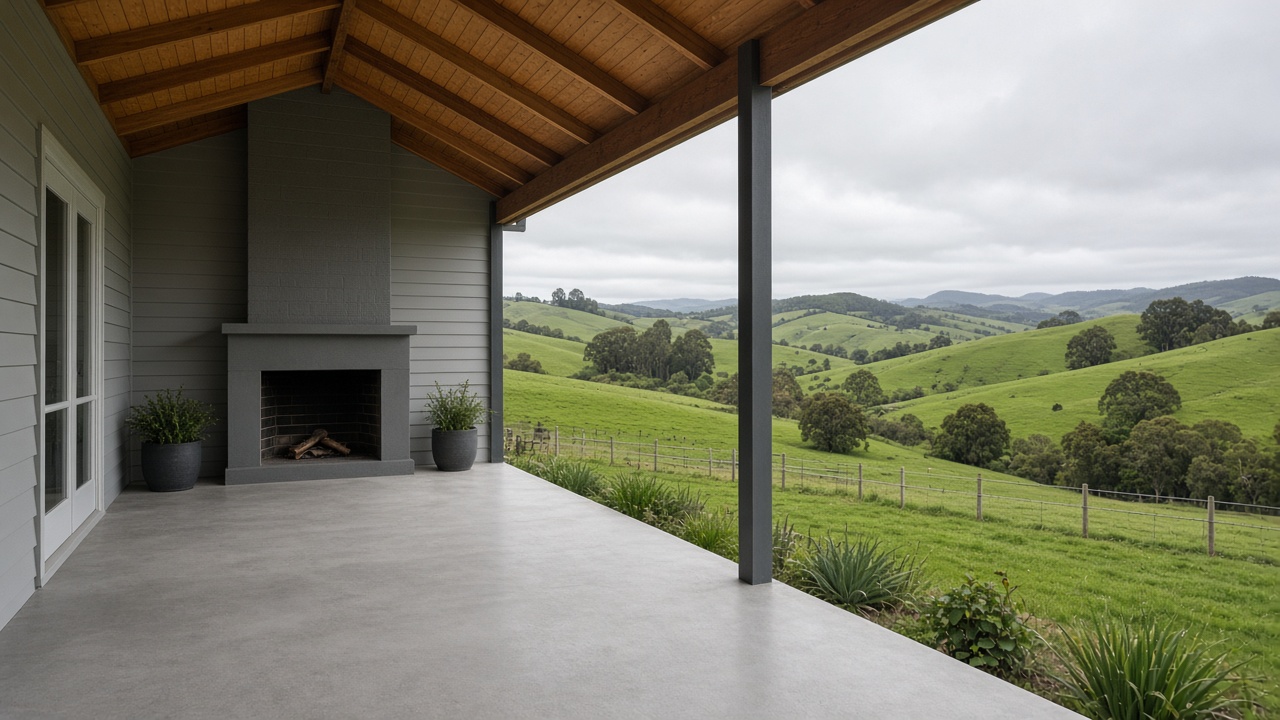
Stamped and stencil concrete in Trafalgar
Stamped and stencil concrete for Trafalgar patios, entries, verandahs, paths and driveways, creating the look of stone, slate, brick or cobbles in a single reinforced slab. Patterns and colours chosen to suit your home, sealed for colour and protection.
Email: info@trafalgarconcreting.com.au
Patterned concrete explained
Stamped concrete, sometimes called imprinted or printed concrete, is coloured concrete pressed with textured mats while it is still workable, leaving the shape and texture of stone, slate, timber or brick. Stencil concrete uses paper stencils laid on the fresh surface before colour is applied, creating a pattern of grout lines such as brick or tile.
Both give a decorative finish with the strength and single-slab stability of concrete, with no individual pavers to sink or weeds between joints.
Where stamped and stencil finishes suit
Around Trafalgar, patterned concrete works best on: – covered patios and alfresco areas – verandahs and front entries on older homes – feature paths and courtyards – pool surrounds, with a suitable texture – short driveways or driveway borders
On long, steep or heavily used driveways, the pattern can become slippery when wet or wear in wheel paths, so we usually recommend exposed aggregate or broom finishes there instead, perhaps with a stamped border.
Patterns and colours
Popular patterns include ashlar slate, cobblestone, random stone, herringbone brick and timber boards. A base colour is combined with a release agent in a contrasting tone, which highlights the texture. We bring samples so you can see combinations in daylight.
How it is done
The base, steel and pour are the same as any quality slab. While the concrete is fresh, colour hardener is applied, release agent spread, and the stamp mats pressed in sequence across the surface. Timing and weather are critical. After curing, the release is washed off and the surface sealed.
How long does a stamped concrete patio last?
The concrete itself can last for decades. The sealer, which protects the colour and pattern, wears over time and needs re-coating every few years, more often in sunny or high-traffic areas. Re-sealing keeps the surface looking fresh.
Grip in the wet
Patterned concrete with a glossy sealer can be slippery when wet, a real consideration in West Gippsland. We use textured patterns where grip matters and can add anti-slip additives to the sealer.
Written quotes
After a site visit we provide a written, itemised quote covering preparation, base, steel, colour, pattern, sealing and clean-up.
Stencil concrete and its differences
Stencil concrete creates a pattern of grout lines, typically brick, tile or cobble, by laying a paper stencil on fresh concrete, applying colour, then removing the stencil to reveal lines in the base colour. The surface remains relatively flat and textured, which can give more grip than heavily stamped stone patterns. Stencil finishes suit paths, entries, patios and pool areas where a neat, regular pattern is wanted.
Choosing between stamped, stencil and other finishes
Stamped concrete gives the most realistic stone or slate texture, but can be slippery when sealed and wet. Stencil gives a cleaner, more regular pattern with better grip. Exposed aggregate gives a natural stone look without a pattern, with excellent grip. Coloured concrete with a broom finish is simple and practical. We help you weigh the look against grip, maintenance and the area's use.
Patterned concrete around older homes
On older weatherboards and Federation homes around Trafalgar and Yarragon, a cobblestone or brick stencil pattern on a front path or verandah can echo the era of the house. On modern homes, large-format slate or stone patterns in charcoal or grey suit contemporary facades. We bring pattern samples so you can see them in context.
Joints within the pattern
Control joints are just as important on stamped concrete as on any other slab, but they need to be placed carefully so they follow the pattern lines rather than cut across them. We plan joint positions before the pour so they blend into the design.
Maintenance of stamped concrete
Keep stamped concrete clean by sweeping and hosing regularly. Avoid harsh chemicals that can strip the sealer. Watch for signs that the sealer is wearing, such as dull patches, water soaking in or colour fading, and arrange re-sealing before the colour and surface start to wear. On shaded areas, treat moss early so it does not take hold in the pattern.
Repairing stamped concrete
Small chips or worn patches can sometimes be touched up with colour and re-sealed. Larger damage is harder to repair invisibly, because the pattern and colour need to match. Keeping the sealer in good condition is the best way to avoid repairs.
Stamped borders and feature areas
If you like the look of stamped concrete but want maximum grip and durability, it can be used in smaller doses: a stamped border around an exposed aggregate driveway, a stamped feature panel at a front entry, or a stamped surround to a fire pit. This gives a decorative accent while keeping the main traffic areas in a more practical finish.
Weather on pour day
Stamping requires the concrete to be at exactly the right stage when the mats are pressed. Hot, windy weather speeds setting and shortens the window, while cool, damp weather slows it. We schedule stamped pours carefully and bring enough crew to finish the work within the window.
Choosing a release colour
The release agent used during stamping leaves a secondary colour in the low points of the pattern, adding depth and realism. A darker release on a lighter base gives a weathered stone look, while a subtle release close to the base colour gives a cleaner finish. We show combinations on sample boards so you can see the effect before the pour.
Is stamped concrete right for a driveway?
It can work on short, flat driveways with light traffic. On steep or busy driveways, wheel wear and wet-weather grip are concerns, so we usually suggest exposed aggregate for the main area with a stamped feature border.
Gippsland clay, river flats, red hill soil and two councils
Around Trafalgar the ground changes with the landscape. Town blocks and most new estates sit on yellow and grey clay that swells with winter rain and shrinks in a dry summer. The river flats hold softer silt that stays wet for weeks. South toward Trafalgar South and Thorpdale, the Strzelecki foothills bring deep red volcanic soil that drains freely but goes soft when saturated and scours on a slope. On clay we remove topsoil and soft material and build up compacted crushed rock in layers; on wet flats we may go deeper and lift the finished level; on hill soils we focus on edge support and stopping runoff before it undercuts the slab.
Work inside your boundary is usually permit-free. Crossovers, nature strips and public footpaths are road reserve, which needs consent from Baw Baw Shire for Trafalgar, Yarragon, Warragul, Drouin, Darnum, Thorpdale and Narracan, or Latrobe City for Moe, Newborough and Morwell. Rural entrances on main roads may also involve the state road authority, and slabs for houses, garages and large sheds need a building permit and engineering. We list whatever applies in the quote.
How a Trafalgar Concreting quote is put together
Every quote we send is in writing and itemised, so you can see where the effort goes. It sets out the measured area, any break-out of old concrete and disposal, the excavation depth, the crushed rock under the slab and how it will be compacted, the slab thickness and reinforcement, the finish and colour or stone blend, where the joints will run, drains and pits and where water ends up, any steps, edges or retaining, sealing, and any crossover, road authority or building permit work. Anything that changes the job on the day, such as pump hire for a back yard, a long barrow run or a paddock that needs a temporary track, is spelled out rather than left as a surprise.
We do not advertise a square-metre rate. A driveway on firm clay in a Trafalgar estate, the same driveway on soft Moe River silt, and one climbing a red-soil hill toward Thorpdale each need different preparation, and that is where much of the work sits. Seeing the block first means the quote reflects your job, not an average.
Working with Trafalgar Concreting
Based in Trafalgar 3824
Our base is in town, between Warragul and Moe, so West Gippsland and Latrobe Valley jobs are close by.
Clay, flats and hill soils
We test the ground on every job and prepare the base to suit it, instead of using one depth everywhere.
Free itemised quotes
No published rates, no charge for the visit, and every line of the job written down.
Homes, farms and industry
Estate driveways, house slabs, dairy yards, sheds and industrial floors, with permits identified upfront.
How a job runs, step by step
- 1
Get in touch
Call, email or use the form. Photos of the area, the frontage and any tricky access help us prepare.
- 2
Site visit
We measure up, take levels, check the soil, look at where water goes and show finish samples on site.
- 3
Written quote
An itemised quote covering preparation, base, thickness, steel, finish, joints, drainage and any permits.
- 4
Ground work
Old concrete and soft soil are removed, crushed rock is compacted, forms are set and steel is placed on chairs.
- 5
The pour
Concrete arrives by truck or pump, is screeded and finished, and is protected from rain, wind or heat while it cures.
- 6
Hand-over
Joints are cut, forms removed, the site cleaned up, sealer applied if included, and care notes left with you.
Stamped and Stencil Concrete questions
Is stamped concrete slippery?
It can be when sealed and wet. We choose textured patterns and add anti-slip additives where needed.
How often does stamped concrete need resealing?
Usually every few years, depending on sun and traffic.
Can stamped concrete crack?
Like all concrete, it can. Steel, a good base and joints placed within the pattern keep cracking controlled.
Where we work
Other concreting services
Speak with a Trafalgar concreter
We visit, measure and test the ground at no cost, then send a written quote for jobs in Trafalgar 3824, Baw Baw Shire and the western Latrobe Valley. There are no prices on this site because no two blocks are alike.